ADHD
Why Rejection Hurts So Much More When You Have ADHD
By Angela DeGiaimo, LCSW · Therapist for overthinkers, New York State
One unanswered text and your nervous system has already decided.
You sent the text. Now it's been 20 minutes and they haven't responded. Intellectually, you know they're probably just busy. Maybe in a meeting. Maybe their phone died. But your nervous system? Your nervous system has already decided you've ruined the friendship, you said something wrong, you're too much, and this is the beginning of the end.
Sound familiar?
If you have ADHD, this kind of emotional spiral isn't just anxiety or overthinking. There's actually a name for it — and understanding it might be the most validating thing you read today.
What Is Rejection Sensitive Dysphoria?
Rejection Sensitive Dysphoria, or RSD, is an intense emotional response to the perception of rejection, criticism, or failure. And the key word there is perception — you don't have to actually be rejected for RSD to kick in. A slow text reply, a friend seeming quieter than usual, a piece of feedback from your boss, even your own sense that you might have said something slightly off can be enough to set it off.
When RSD hits, it doesn't feel like disappointment. It feels like devastation. Like something is actually, physically wrong. That's not drama. That's not you being sensitive. That's your nervous system doing something it was always wired to do — just doing it louder and harder than most people's.
While RSD isn't an official clinical diagnosis yet, it's a concept that resonates deeply with a huge portion of the ADHD community — and what I see week to week with ADHD brains — including mine — lines up with why. If you've ever thought "I know I'm overreacting but I can't stop" — that's RSD. Your brain isn't being dramatic. It genuinely cannot modulate the intensity of what it's feeling in the moment.
Why Does ADHD Make Rejection Feel So Catastrophic?
Here's the thing people don't talk about enough: ADHD isn't just about focus — emotional regulation is a huge piece of it, too. Clinically, we're often talking about dopamine and norepinephrine differences that change how intensely you feel things and how fast you can come back down. In plain language: the brakes don't work the same way. Emotions arrive fast, hit hard, and take longer to settle.
Add to that a lifetime of experience. Most people with ADHD — especially those who went undiagnosed for years — have heard some version of the following on repeat:
- You're too sensitive.
- You're too much.
- Why do you make everything so hard?
- Why can't you just focus?
- Why can't you just let it go?
When you've spent decades being told your reactions are disproportionate, your brain gets hypervigilant. It starts scanning constantly for signs that you're about to be rejected, criticized, or left out — because it's learned that those moments are coming and they're going to hurt. The anticipation of rejection becomes its own kind of suffering.
What RSD Actually Looks Like in Real Life
RSD shows up differently for different people. Some of the most common patterns I see in my clients:
- You avoid situations where you might fail or be judged. Not because you don't care — because you care so much that the risk of rejection feels unsurvivable. This can look like procrastination, not applying for things, pulling back from relationships before they have a chance to pull back from you.
- You people-please — hard. Keeping everyone happy feels like the only way to stay safe. Saying no feels almost physically impossible. Conflict is terrifying. Even minor friction can feel like the relationship is in danger.
- You replay interactions obsessively. That thing you said in a meeting three days ago? Still living rent-free in your head. You're not being neurotic — your brain is trying to figure out if you're safe.
- You react intensely — and sometimes regret it. RSD can look like explosive frustration, shutting down completely, or suddenly withdrawing from someone you care about. It moves fast, and the shame spiral afterward can be just as painful as the initial trigger.
- Your sense of self fluctuates wildly based on external feedback. Positive feedback feels amazing. Criticism or even neutral responses can send you into a spiral. It's exhausting to feel like your self-worth lives outside of you.
The Shame Layer
Here's something that doesn't get talked about enough: most people with ADHD and RSD carry enormous shame about their emotional reactions on top of the reactions themselves. You already know your response feels big. You already know, in the back of your mind, that they probably didn't mean it the way it landed. But knowing that doesn't stop the feeling — and then you get to feel bad about the feeling. Two layers of suffering for the price of one.
That shame is almost always rooted in years of being told that your emotions were the problem. That you were the problem. That if you could just calm down, toughen up, or stop taking things so personally, everything would be easier.
Here's what I want you to hear: the intensity of your emotions is not a character flaw. It's a feature of how your nervous system is built. That doesn't mean we can't work on it — it means we have to work on it in ways that actually account for your brain, not someone else's. You weren't too sensitive. You were under-supported. There's a difference.
What Actually Helps
RSD can feel overwhelming, but it's not something you just have to white-knuckle through forever. Here's what tends to make a real difference:
- Naming it in the moment. When the wave hits, just recognizing "this is RSD, this is my nervous system, not the truth" can create a tiny bit of distance between you and the spiral. It won't make the feeling go away, but it interrupts the story your brain is trying to build around it.
- Buying yourself a window. RSD is intense but it also tends to move relatively quickly. If you can avoid sending the "are you mad at me?" text or firing off the email or having the conversation in the height of the spiral — even waiting 20 minutes — you'll often find the intensity drops significantly. Not gone, but manageable.
- Working on your external validation dependence — gently. This doesn't mean becoming someone who doesn't care what others think (that's not real). It means slowly building a more stable internal sense of yourself that doesn't completely collapse under the weight of someone else's mood. Therapy is really useful here, because this work requires understanding where the pattern came from.
- Medication. For some people, ADHD medication that addresses the underlying neurological differences also significantly reduces RSD. If you're in treatment for ADHD and nobody's talked to you about the emotional component, it's worth bringing up with your prescriber.
- Therapy — specifically. Not all therapy approaches work equally well for RSD. Cognitive Behavioral Therapy (CBT) can help you examine and challenge the thoughts that come with the rejection spiral. Trauma-informed work helps when RSD is rooted in early experiences of being criticized, dismissed, or made to feel like too much. The goal isn't to stop caring — it's to build more stability in how you respond when things feel threatening.
A Note If You're Just Figuring This Out
A lot of people don't get diagnosed with ADHD until adulthood. And many of those people spent decades thinking they were just too sensitive, too emotional, too needy, too dramatic — when really, they were undiagnosed and unsupported. If that's you, it makes complete sense that you've built a whole personality around managing and hiding your emotional reactions. That you've become a master people-pleaser, a chronic apologizer, someone who can read the room from three miles away because you learned early that you needed to.
Understanding RSD doesn't mean resigning yourself to it. It means finally having language for something you've been living with — and that's actually where change starts. You don't have to keep convincing yourself that everything is fine. You're allowed to get support for this.
You're Not Too Much. You're Under-Supported.
If any of this resonated with you — if you've spent years feeling like your emotional reactions were your biggest flaw, if rejection sends you into a spiral you can't logic your way out of, if you've been white-knuckling your way through relationships because you're terrified of being too much — this is what therapy can help with.
My practice is telehealth-only, which means we can work together from wherever you are in New York State. And yes, my dog Onyx occasionally makes appearances. He's never once judged anyone for crying. (He's an excellent therapist's assistant.)
If you're ready to talk, book a free 15-minute consultation. No pressure, no therapy-speak — just an honest conversation about what you're dealing with and whether I can help. Late-diagnosed adults often experience rejection sensitivity especially acutely — it was there all along, it just didn't have a name yet. If that's you, the late-diagnosed ADHD page covers the fuller arc.
— Angela DeGiaimo, LCSW | NY State of Mind Therapy Telehealth therapy for anxiety, ADHD by telehealth, and the messy work of being human | New York State
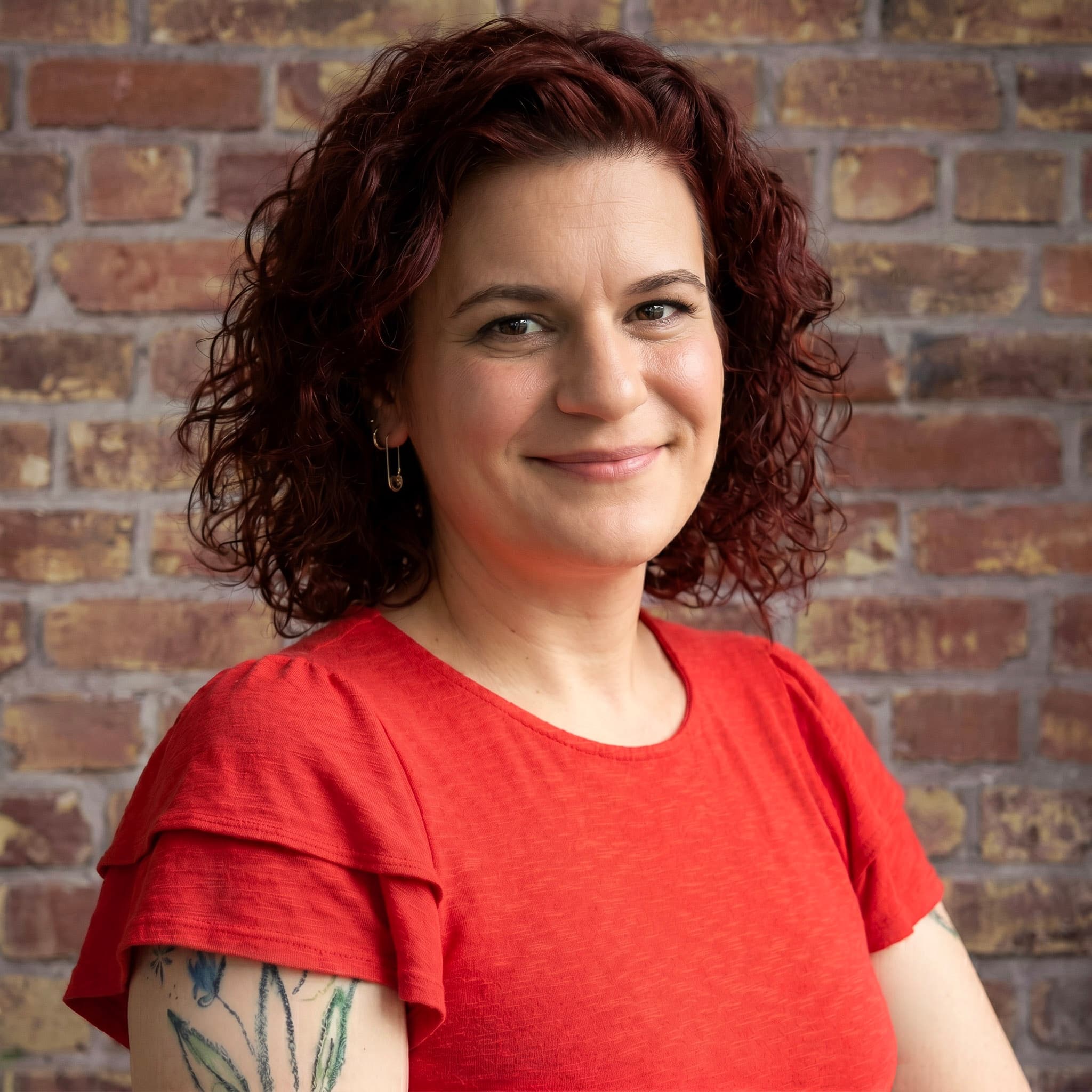
Angela DeGiaimo, LCSW
Angela is a therapist based in Brooklyn, NY specializing in anxiety, ADHD, people-pleasing, and the patterns that form when you've spent a long time pretending everything is fine. She has ADHD herself, which means she understands the experience from the inside. She works with adults via telehealth across New York State.