Relationships
One-Sided Relationships: Why You Keep Giving More Than You Get
By Angela DeGiaimo, LCSW · Therapist for overthinkers, New York State
You text first. You make the plans. You remember everything.
You text first. You make the plans. You remember their birthday, their work stress, the fight they had with their mom three weeks ago. You check in when they go quiet. You make excuses for them when they don't show up.
And somewhere in the back of your mind, you know the math doesn't add up.
But you keep going anyway. Because maybe they're just busy. Maybe you're asking for too much. Maybe this is just what relationships are like and you've been watching too many movies.
If any of this sounds familiar — whether it's a friendship, a romantic relationship, or even a family dynamic — you're not imagining it. And you're not wrong for noticing.
What makes a relationship feel one-sided
One-sided relationships aren't always obvious. It's rarely "I do everything and they do nothing." It's more subtle than that:
- You're the one who reaches out first — almost always
- You find yourself editing what you say to avoid their reaction
- When you're struggling, you don't feel like you can actually go to them
- They're great when things are easy, but absent when things get hard
- You leave interactions feeling drained instead of supported
- You've convinced yourself "this is just how they are" while absorbing all the inconvenience of that
One-sided relationships are exhausting in a specific way: they require you to constantly manage two people's emotional experience — yours and theirs. You track their moods. You soften your needs. You do the labor of keeping things smooth so nothing blows up.
That's not a relationship. That's a second job.
Why this keeps happening (it's not because you pick bad people)
Here's what I see in my work with clients in New York: people who end up in one-sided relationships aren't naive or bad at reading people. In fact, they're usually incredibly perceptive.
The pattern usually starts earlier than the relationship does.
If you grew up in a home where your needs came second — where a parent was emotionally unavailable, where love felt conditional, where you learned to be "the easy one" who didn't ask for much — you developed a set of survival skills that made a lot of sense at the time.
You learned to:
- Read the room before expressing what you need
- Make yourself useful as a way of feeling secure in relationships
- Tolerate inconsistency because it was familiar
- Confuse anxiety and longing with love
These are people-pleasing patterns — and they don't disappear when you become an adult. They become the blueprint.
Add to that the NYC context — where everyone is "so busy," where emotional unavailability gets rebranded as independence, where you're supposed to be low-maintenance because "we're all just figuring it out" — and it becomes even easier to minimize what you actually need from people.
The part nobody talks about: why you stay
People who haven't been in one-sided relationships like to ask: "Well why don't you just leave?"
It's not that simple. And here's why:
- It doesn't feel bad all the time. There are good moments. Enough of them to keep you hoping.
- Leaving feels like giving up. And if you were raised to believe relationships require sacrifice, leaving can feel like a personal failure.
- You've invested so much. The sunk cost is real — emotionally, practically, sometimes financially.
- You still love them. Recognizing a relationship is one-sided doesn't make the feelings disappear.
- You're not sure you deserve more. This one is the hardest to say out loud, but it's often the most true.
That last one is usually where the real work is.
This isn't about blaming yourself — or them
Understanding why you've ended up here isn't about deciding you're broken or that the other person is a villain.
It's about getting honest with yourself about what's actually happening — instead of spending more energy managing, excusing, and waiting.
The relationships we keep returning to tell us something important about what we believe we're worth. About what "normal" feels like. About where we learned to equate effort with love.
That's not a character flaw. It's a pattern. And patterns can change.
What actually helps
In therapy, we don't start with "how do I find better people." We start with the questions underneath that:
- What am I actually looking for in relationships, and have I ever let myself have it?
- What does it feel like to have a need — and what happens inside me when I try to express it?
- Where did I learn that love requires me to be the one who gives more?
- What would I have to believe about myself to actually expect reciprocity?
This is slower work than "just leave" or "set a boundary." But it's the work that actually sticks.
Because the goal isn't just to get out of this one relationship. It's to stop ending up here.
A note if you're reading this at 2am, replaying a conversation
You're not being dramatic. You're not asking for too much. The fact that you're questioning your own perception of what's happening is itself a signal worth paying attention to.
Healthy relationships don't usually make you feel like you're the problem for noticing the imbalance.
You deserve relationships where you don't have to shrink, convince, or wait. Where showing up for someone feels good instead of depleting. Where being cared for doesn't feel suspicious or foreign.
That's not too much to want. It's just enough.
If relationship patterns are something you're ready to look at, I work with people navigating exactly this — the people-pleasing, the over-giving, the relationships that leave you feeling more alone than if you'd been by yourself. Learn more about how I work with relationship patterns and boundaries, check the FAQ for common questions, or book a free 15-minute consultation — no pressure, no intake forms, just an honest conversation about whether I can help.
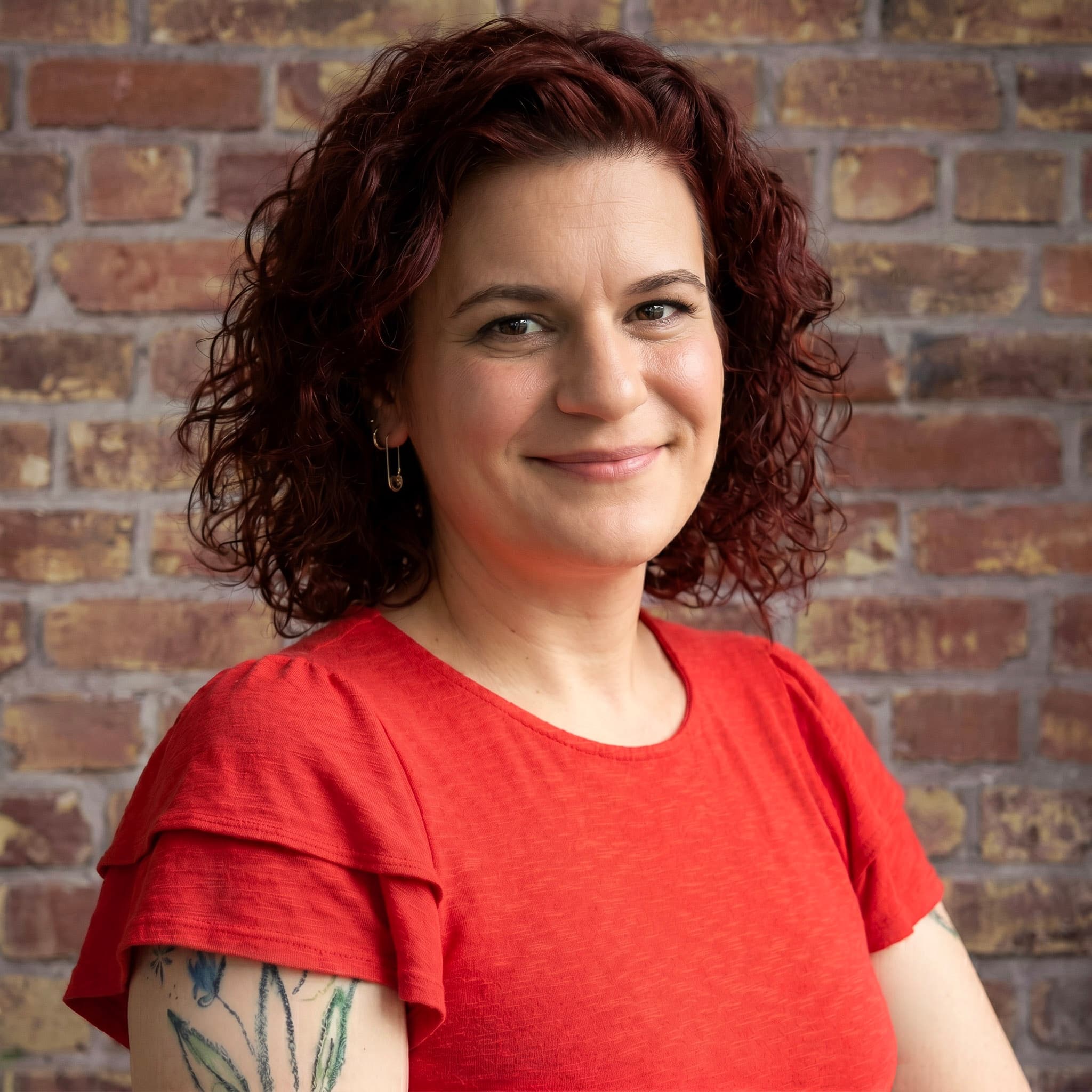
Angela DeGiaimo, LCSW
Angela is a therapist based in Brooklyn, NY specializing in anxiety, ADHD, people-pleasing, and the patterns that form when you've spent a long time pretending everything is fine. She has ADHD herself, which means she understands the experience from the inside. She works with adults via telehealth across New York State.