Relationships
Boundaries Require Self-Trust Before They Require Courage
By Angela DeGiaimo, LCSW · Therapist for overthinkers, New York State
You say no clearly. Somewhere between the sentence and their reaction, you start looking for a way to walk it back.
You say no. Clearly, even. And then, somewhere between the sentence leaving your mouth and the other person’s face doing something you didn’t expect, you start looking for a way to walk it back.
You rehearse the conversation in the shower with total conviction. By the time it actually happens, “no” has quietly softened into “let me think about it.”
You hold the boundary once, get some pushback, and the first thing that happens isn’t anger at the pushback. It’s a private audit: was I actually being unreasonable?
You know exactly what you need. You just can’t seem to say it out loud without immediately following it with three reasons it would be fine if the answer were no instead.
Most advice about this goes straight to nerve — be braver, hold the line, don’t back down. But courage usually isn’t the missing piece. Something has to happen before courage is even relevant: believing the limit was real enough to defend.
Why boundaries actually require self-trust
A boundary is a statement about reality. This is what I need. This is what I won’t do. This is where it stops. Like any statement of fact, it only holds up under pressure if you actually believe it — not performed conviction, the real kind, the kind that doesn’t need re-litigating the second someone pushes back.
People usually describe the missing piece as confidence, and when that doesn’t quite explain it, they reach for something like self-trust. But underneath both of those is something more specific: ownership. Not confidence that you can defend the limit, and not trust in yourself in general — a quiet, settled sense that this limit belongs to you, the way a fact belongs to you, rather than a request you’re hoping gets approved.
That’s where it usually falls apart. Someone reacts badly, or just reacts at all, and instead of the reaction bouncing off an already-settled decision, it goes straight to the part of you that never fully owned the limit to begin with. The boundary doesn’t hold because it was never standing on solid ground to begin with. You hadn’t fully come to own it yet — you were hoping it would go over well, not certain it was yours to hold regardless of how it went.
This is why the same person can be composed and articulate right up until the moment someone actually disagrees, and then fold almost instantly. It was never about finding the nerve to say the sentence. It was about whether, underneath the sentence, you actually owned the limit you were stating.
Why “be brave” doesn’t fix it
Telling someone to be braver assumes the boundary is solid and the only problem is delivery. For a lot of people, that’s backwards. You can say “no” in a perfectly steady voice and still cave four seconds later, because the words were never the weak point. The conviction behind them was.
It’s a bit like being coached on how to hold a line more confidently, when the actual issue is that you’re not sure the line is yours to draw. Better delivery doesn’t fix uncertain ownership. It just makes the uncertainty sound more polished on the way out.
Where the doubt comes from
This is usually where an earlier pattern is already doing its work. Someone whose self-trust has been worn down by people-pleasing doubts whether their limit will look selfish the moment someone’s disappointed by it. Someone shaped by perfectionism wonders if their reason is airtight enough to justify saying no, and quietly assumes it isn’t. Someone managing ADHD might doubt whether their need for a certain amount of structure or space is a real requirement or just something they’re using as an excuse. Someone used to checking in for reassurance looks, almost automatically, for someone else’s agreement that the boundary is reasonable — before they’ll fully stand behind it themselves.
Different histories, same result: the boundary gets built on top of a foundation that was never fully trusted to begin with. It doesn’t take much to knock it over.
What rebuilding actually looks like
This isn’t about writing better scripts or finding firmer language. Firmer language on an uncertain foundation just sounds like acting.
It starts smaller — deciding on a limit in a low-stakes situation and, when it gets pushback, not immediately reopening the question of whether you were right. Let the reaction be the reaction. Let your original read stay standing anyway.
It might look like noticing the urge to over-explain a boundary the moment you state it — three reasons, a cushion of justification — and trying it once with just the boundary, nothing stapled to the back of it for protection.
It might look like tolerating someone’s disappointment for a few uncomfortable seconds without immediately checking whether that disappointment means you did something wrong.
None of this is really about becoming tougher. It’s about collecting enough small moments where your limit held, and the world didn’t end, to start believing the next one will hold too.
Boundaries were never mainly a courage problem. Courage is just what’s left to do once you already trust that what you’re defending is real. It’s hard to hold a line you don’t quite believe is yours to draw.
If this is a pattern you recognize, I offer a free 15-minute consultation — no pressure, just an honest conversation about what’s actually going on. You can also read more in my guide to self-trust erosion, or in the companion piece on why reassurance helps for five minutes.
— Angela DeGiaimo, LCSW | NY State of Mind Therapy People-pleasing therapy · Telehealth across New York State
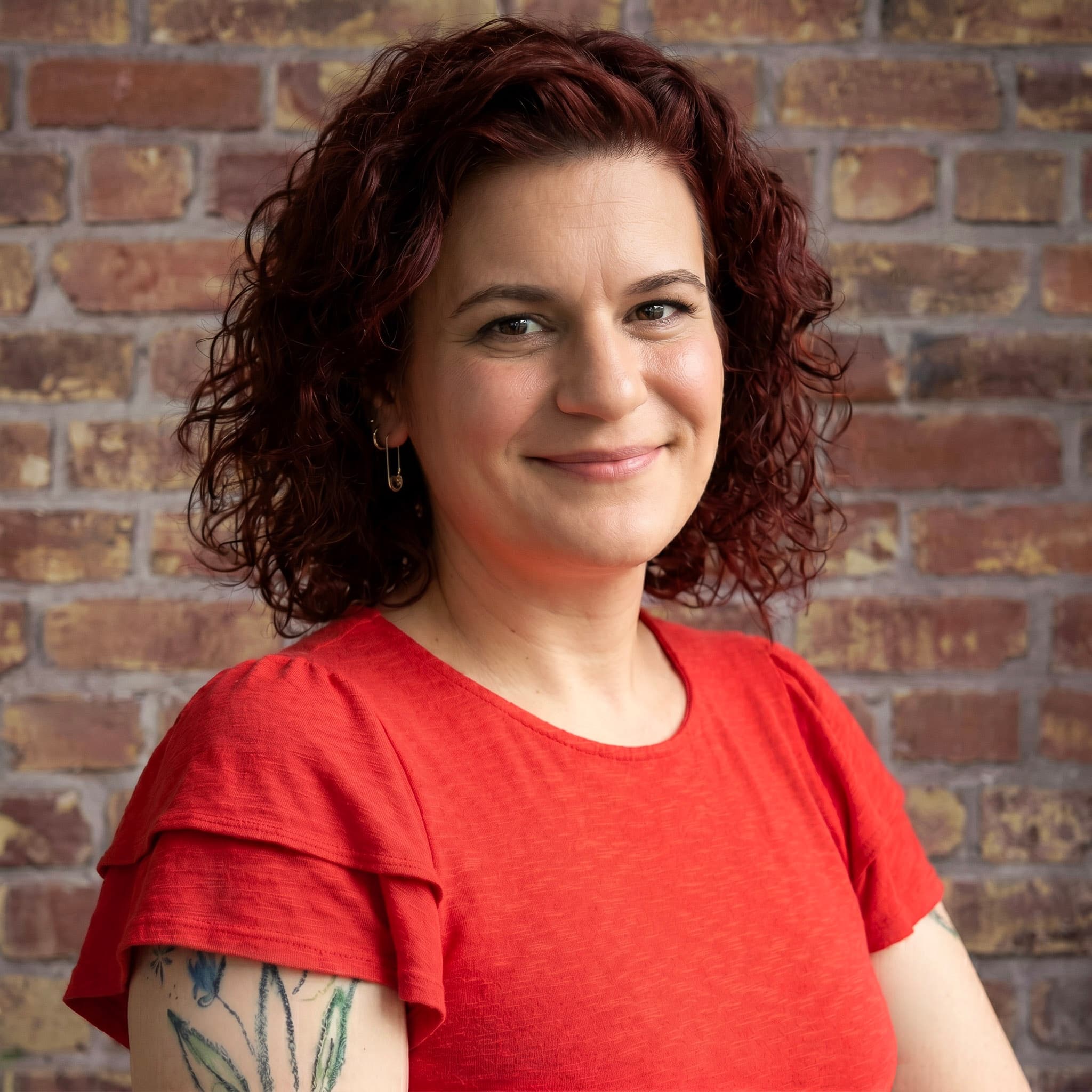
Angela DeGiaimo, LCSW
Angela is a therapist based in Brooklyn, NY specializing in anxiety, ADHD, people-pleasing, and the patterns that form when you've spent a long time pretending everything is fine. She has ADHD herself, which means she understands the experience from the inside. She works with adults via telehealth across New York State.