Self-Growth
When Self-Trust Isn’t the Answer
By Angela DeGiaimo, LCSW · Therapist for overthinkers, New York State
You genuinely don’t know if you’re too close to this to see it clearly, so you ask someone who isn’t.
You genuinely don’t know if you’re too close to this to see it clearly, so you ask someone who isn’t.
You’re running on four hours of sleep, and you know better than to trust your read on a hard conversation tonight.
Someone with real expertise tells you you’re wrong about something outside your field, and you update, because they actually know more than you do.
You’ve made this exact kind of call badly three times before, so this time you check twice.
None of that is self-trust erosion. That’s just good judgment.
I’ve spent several articles now describing a specific pattern — a kind of self-doubt that doesn’t discriminate, doesn’t resolve, and shows up regardless of someone’s actual track record. But if that lens gets stretched to cover every instance of checking, hesitating, or asking for help, it stops being useful. It’s worth being precise about where it applies, and where it doesn’t.
The distinction that actually matters
Eroded self-trust and accurate self-doubt can look identical from the outside. Both involve pausing. Both involve checking. Both can involve asking someone else what they think. The difference is underneath, and it comes down to two things: whether the doubt has a reason, and whether it ever actually resolves.
Eroded self-trust doesn’t need a reason. It shows up on decisions someone is genuinely qualified to make, in situations they’ve navigated successfully many times before, about things they have every reason to already know. And when more information arrives, it can change the answer — but it was never the thing this was waiting for. The rule was already in place: your own read wasn’t allowed to count as enough by itself, applied more or less everywhere, regardless of the evidence in front of you.
Accurate self-doubt has a reason you could name out loud, and the reason usually points at something real: you’re missing information, you’re too emotionally involved to be objective right now, you’ve gotten this specific kind of decision wrong before, or someone who actually knows more than you is telling you something you don’t. And it resolves. Once the missing piece gets filled in, the doubt goes away — it doesn’t just relocate to sit on top of the next decision.
The tell isn’t whether you doubt yourself. It’s whether the doubt ever actually resolves. That’s why this can be difficult to recognize in yourself. From the outside, both patterns involve pausing, checking, asking questions, seeking advice — the behavior can look identical. What differs is the job the behavior is doing. One is helping you gather information you genuinely don’t have. The other is trying to solve a problem that more information can never solve.
Where this lens genuinely doesn’t apply
Acute clinical states. Mania, psychosis, severe dissociation, acute intoxication — in states like these, someone’s perception of reality can be measurably, dangerously off, and distrusting it can be the most protective thing a person or the people around them can do. “Learn to trust yourself” is actively bad advice in the middle of an episode like that.
Real gaps in knowledge or skill. Deferring to a doctor about your bloodwork, a lawyer about a contract, or a structural engineer about your foundation is an accurate read on the fact that they know something you don’t — not self-trust erosion. Erosion is doubting your read on things you’re actually positioned to know, not extending equal weight to your own opinion in every domain regardless of expertise.
An earned track record. Someone who has made the same kind of harmful decision — financially, relationally, with substances — multiple times isn’t a case of self-trust erosion when they start checking with someone else before the next one. That’s often a hard-won, appropriate correction, and treating it as a wound to heal instead of a lesson learned would be a disservice.
The opposite problem. Some people’s difficulty isn’t too little self-trust — it’s too much. Real overconfidence, real difficulty taking in feedback, a genuine pattern of not updating even when the evidence is clearly against them. Handing that person a framework built around “trust yourself more” wouldn’t just be unhelpful. It would reinforce exactly the thing that needs to change.
Cultural and relational context. Plenty of families, cultures, and relationships put real weight on collective or interdependent decision-making, where checking in with others is the actual value system at work, not a failure of individual trust. Framing every instance of that as erosion risks quietly smuggling in an assumption — that trusting your own read above everyone else’s is the healthy default — which is a cultural preference, not a clinical fact.
Why the distinction is worth protecting
It would be easy to let this framework quietly expand until it explained everything — every hesitation, every request for feedback, every moment of not being sure. That would make it feel more powerful. It would also make it wrong more often, and less useful exactly when someone needs an accurate read on their own situation.
There’s a real cost to getting this backwards. Someone who’s genuinely overconfident, actively avoiding feedback, or repeatedly ignoring evidence could use “trust yourself” as permission to keep doing exactly what isn’t working. Someone getting valid, specific feedback could wave it off as “outside noise” instead of information worth taking in. The framework is only worth having if it can tell the difference — and say so, even when the answer is that self-trust isn’t actually what’s missing.
That’s what makes self-trust erosion a useful lens rather than a universal explanation: it’s precise about what it’s describing, and it’s willing to say when it doesn’t apply.
The point of a framework isn’t to explain everything. It’s to help you see one important thing more clearly. Sometimes the clearest answer is that this isn’t what you’re dealing with — and that’s useful too.
If you’re not sure whether what you’re experiencing fits this pattern or something else, that’s a reasonable thing to bring to a first conversation. I offer a free 15-minute consultation — no pressure, just an honest conversation about what’s actually going on. You can also read more in my guide to self-trust erosion.
— Angela DeGiaimo, LCSW | NY State of Mind Therapy Therapy services · Telehealth across New York State
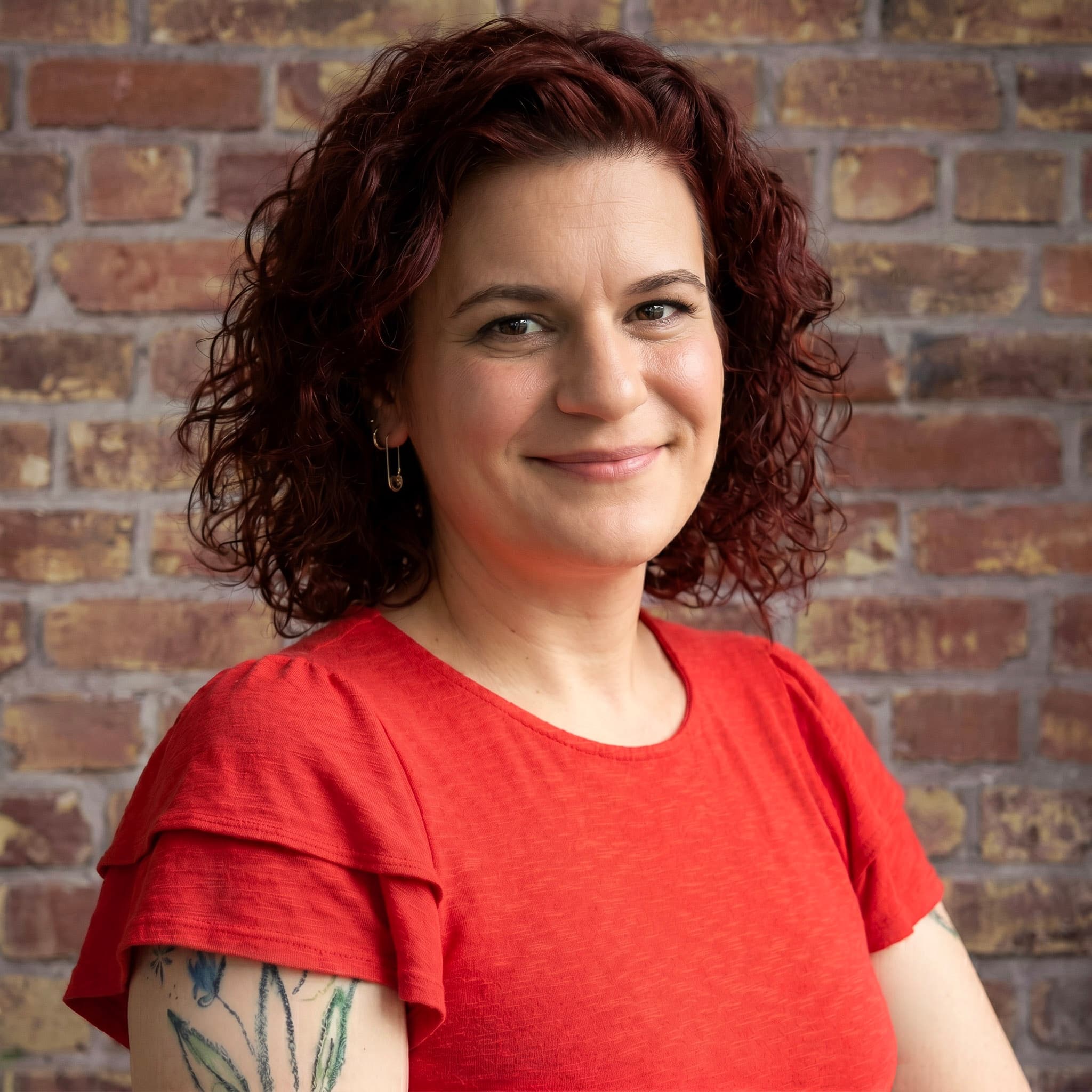
Angela DeGiaimo, LCSW
Angela is a therapist based in Brooklyn, NY specializing in anxiety, ADHD, people-pleasing, and the patterns that form when you've spent a long time pretending everything is fine. She has ADHD herself, which means she understands the experience from the inside. She works with adults via telehealth across New York State.