Relationships
Why You Keep Repeating the Same Patterns (And What to Do About It)
By Angela DeGiaimo, LCSW · Therapist for overthinkers, New York State
You swore this time would be different. Somehow it isn't.
You swore this time would be different. New job, new relationship, new city — clean slate. And for a while it was. And then, slowly, somehow, you ended up in the exact same place you were before.
Same dynamic with a different person. Same role you always end up playing. Same feeling of being the one who gives more, tries harder, or gets left holding the emotional weight while everyone else seems fine.
If this sounds familiar, you're not cursed, and you don't have terrible judgment. You have patterns. And patterns have origins.
Why patterns repeat in the first place
The frustrating truth about repeating patterns is that they're not accidents. They're the result of very logical, very human processes — just ones that are running in the background, mostly outside your awareness.
Here's what's actually happening:
Your brain is pattern-matching, not pattern-seeking. The nervous system is wired to find what's familiar and treat it as safe — even when familiar isn't good. So dynamics that replicate what you grew up with feel recognizable, and recognizable can feel like comfort even when it's actually harm.
Your early relationships created a blueprint. The way love, conflict, care, and disappointment worked in your family of origin becomes the template your brain uses to interpret every relationship that follows. Not because you're stuck — because that's how humans are built.
The roles you learned to play are deeply grooved. If you were the responsible one, the peacekeeper, the one who managed everyone's feelings — that role doesn't just disappear when you become an adult. It follows you into your friendships, your romantic relationships, your workplace dynamics.
You unconsciously recreate what you know. This isn't self-sabotage. It's your nervous system doing what it was trained to do — gravitating toward what it recognizes as normal, even when part of you knows normal wasn't okay.
Understanding this doesn't mean you're destined to repeat these patterns forever. It means the work isn't about finding better people or making better choices — it's about changing what feels normal to you.
What boundary issues are actually about
"Set better boundaries" has become such a cliché that it's almost meaningless. Everyone says it. Almost no one explains why it's so hard.
Here's what I actually see with clients who struggle with boundaries: it's rarely that they don't know what a boundary is. It's that setting one feels genuinely dangerous — emotionally, relationally, sometimes physically. The cost of the boundary feels higher than the cost of not having it.
That calculation usually makes complete sense when you trace it back:
- If you grew up in a home where expressing needs led to conflict, withdrawal, or punishment — your nervous system learned that needs are dangerous
- If love in your family felt conditional — dependent on being easy, accommodating, or not asking for too much — then saying no feels like risking the relationship
- If you were the emotional caretaker in your family, your sense of worth became tied to being needed — making it genuinely hard to step back even when you want to
- If anger or conflict was unpredictable or scary growing up, you may have learned to manage other people's emotions as a way of staying safe — and that habit is incredibly hard to unlearn
The problem isn't that you don't know what a boundary is. The problem is that somewhere along the way, you learned that having needs made you a burden — and that belief is running your relationships without your permission.
The signs you might be caught in a pattern
Patterns are easiest to see from the outside. From the inside, they can feel like just how things are, or like a series of unrelated bad luck. Some signs worth paying attention to:
- You end up in caretaking roles in most of your close relationships — the one everyone leans on, the one who holds it together
- You find yourself drawn to people who need fixing, rescuing, or a lot of patience
- You say yes when you mean no, then feel resentful — then feel guilty for feeling resentful
- You avoid conflict so consistently that small things build up until they explode, or until you quietly disappear from relationships
- The relationships that feel most intense and compelling are often the ones that are least stable or reciprocal
- You're very good at reading other people's emotional states and adjusting yourself accordingly — and exhausted by it
- Calm, available, mutually reciprocal relationships sometimes feel boring or like something must be wrong
That last one is important. If secure attachment feels unfamiliar, your nervous system may actually resist it — not because you don't want it, but because it doesn't match what you learned to expect from people.
Why insight alone isn't enough
A lot of people come to therapy already knowing their patterns. They can name the dynamic, trace it back to childhood, explain exactly why they do what they do — and still can't stop doing it.
This is one of the most frustrating experiences a person can have, and it deserves to be named: knowing why you do something does not automatically change it. Understanding is necessary but not sufficient.
That's because patterns aren't stored in the part of your brain that understands things. They're stored in the part that feels things — in your nervous system, in your body, in the automatic responses that happen before conscious thought catches up.
Changing them requires working at that level. Which is slower, and messier, and less satisfying than just figuring out the "why" — but it's what actually works.
What the work actually looks like
In therapy, working on patterns and boundaries isn't about scripts for how to say no, or worksheets about your attachment style. It's deeper than that.
We look at where the pattern started — what it protected you from, what need it was meeting, why it made sense. We work on updating the beliefs running underneath it: about what you deserve, what relationships are supposed to feel like, whether your needs are allowed to exist.
And we work on what happens in your body when you try to do something different — because often the first time you hold a boundary or ask for something you need, it feels genuinely terrifying. Not because it's wrong. Because it's new. And new, when you've been running the same program for thirty years, feels like danger.
The goal isn't to turn you into someone who has no trouble with boundaries and breezes through conflict. It's to give you more choice — so you're responding to what's actually in front of you rather than reacting to a script that was written before you were old enough to write it yourself.
You're not broken. You're patterned.
There's a difference between those two things, and it matters.
Broken implies something went wrong with you. Patterned means you learned what you learned in the environment you were in, and your brain did exactly what it was supposed to do — it adapted. The patterns were once solutions. They just outlived their usefulness.
That's not a life sentence. It's a starting point.
If you're tired of ending up in the same place and ready to actually understand what's driving it, read about emotional over-responsibility, or learn more about how I work with relationship patterns and boundaries. If you're curious about how early experiences shape adult patterns, explore childhood trauma therapy. Or if you're curious about what therapy with me actually looks like, see what to expect in your first session. When you're ready, you can book a free 15-minute consultation — no intake forms, no pressure, just an honest conversation about where you are and whether I can help.
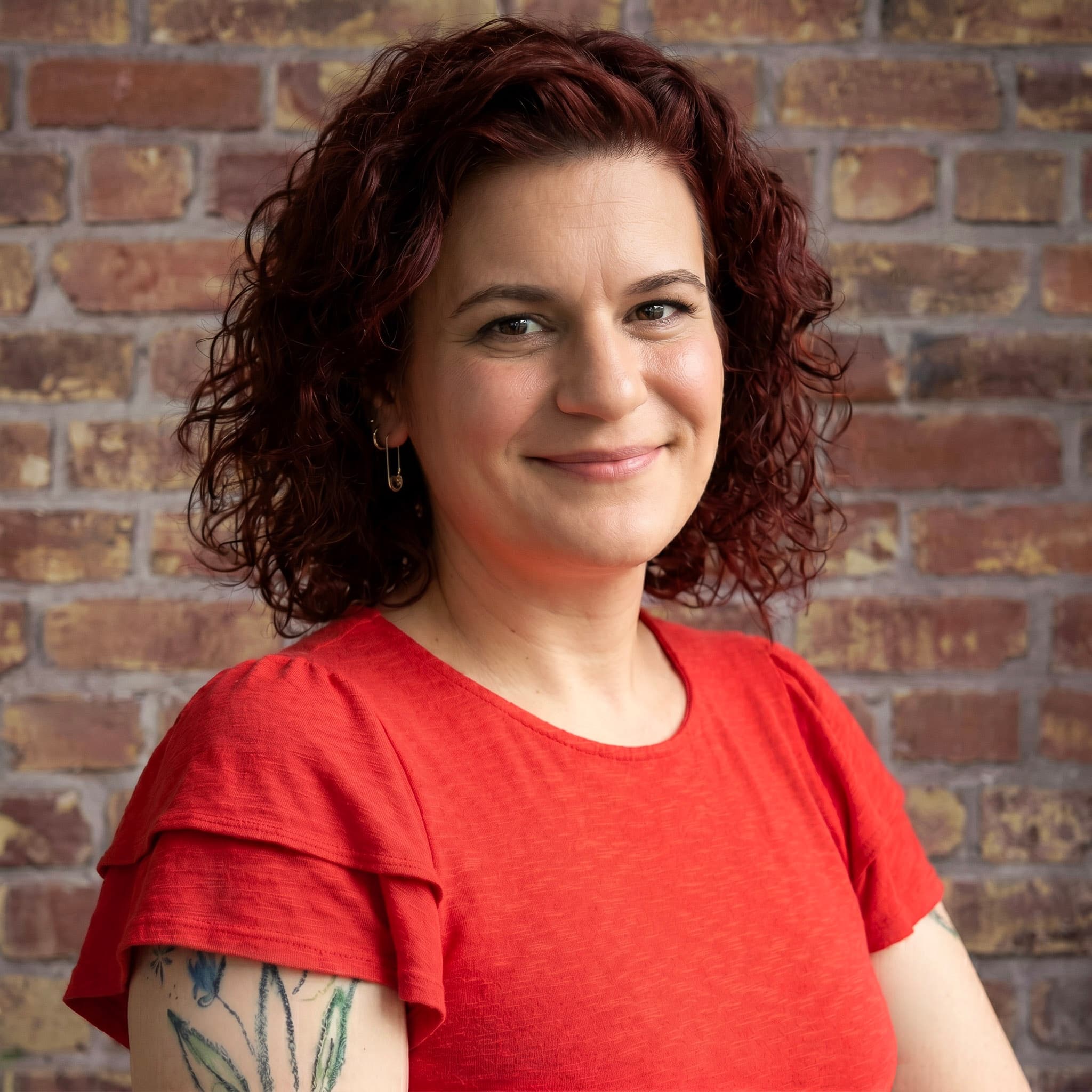
Angela DeGiaimo, LCSW
Angela is a therapist based in Brooklyn, NY specializing in anxiety, ADHD, people-pleasing, and the patterns that form when you've spent a long time pretending everything is fine. She has ADHD herself, which means she understands the experience from the inside. She works with adults via telehealth across New York State.